Quick Build Toolkit + Strategies
The Lynn Safe Streets for People Playbook helped identify a menu of street design treatments that can be installed across the City to improve street safety. These infrastructure interventions can improve street safety by addressing common root causes of crashes. This includes slowing down vehicle traffic, encouraging slower turns at intersections, shortening pedestrian crossing distances, and making people walking and biking more visible at intersections.
Daylighting
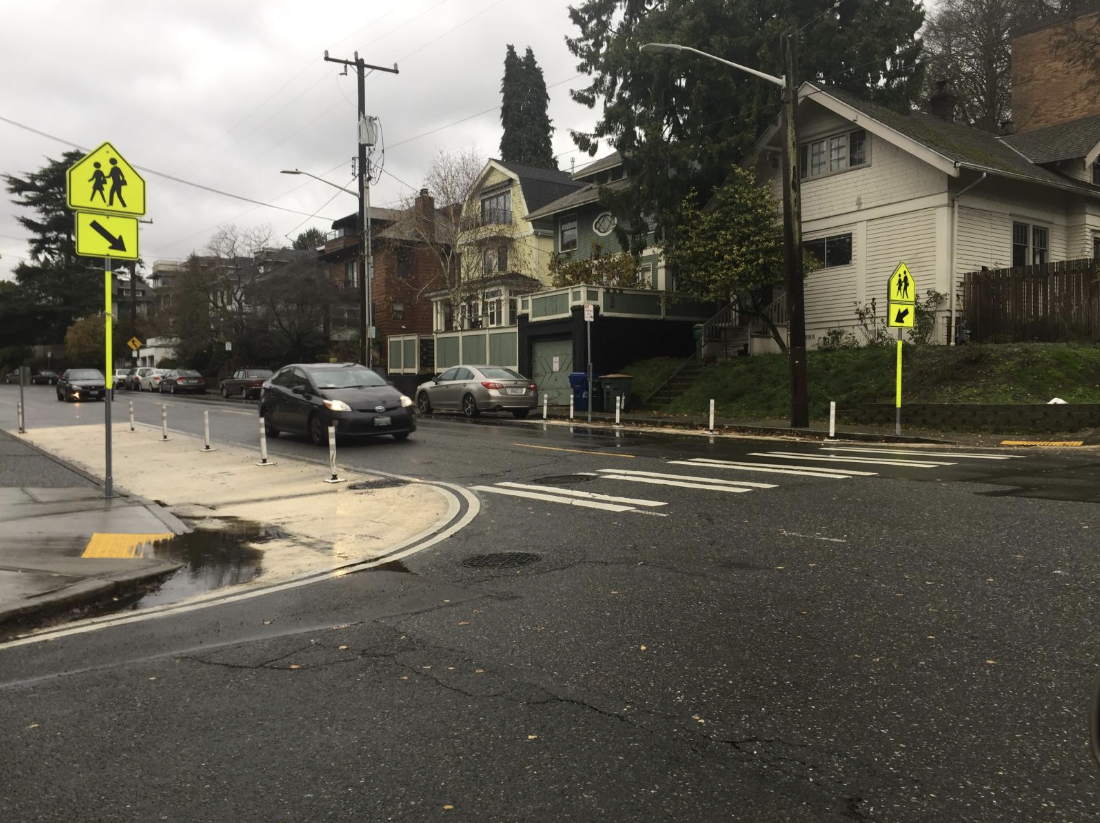 Daylighting refers to the removal of street parking spaces around intersections and crossings. This allows drivers to see pedestrians entering crosswalks sooner, making them more likely to yield to pedestrians. On streets with bike lanes, daylighting can also make people biking more visible to vehicle traffic as they approach intersections.
Curb Extensions 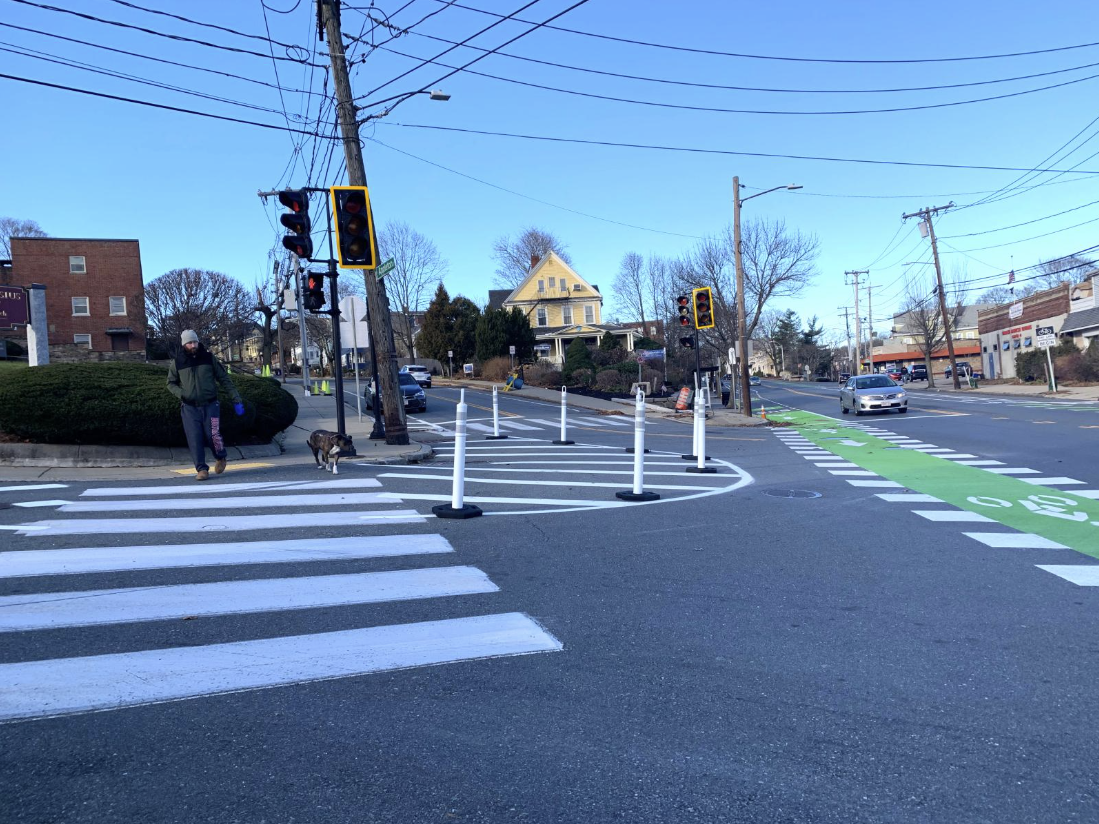 Curb extensions, or “bump outs,” are extensions of the sidewalk into the parking lane at intersections. They shorten the crossing distance for people walking, encourage drivers to make tighter and slower turns, and can provide space for public amenities like bike parking, benches, and greenery. Curb extensions also serve to daylight intersections.
Geometric Intersection Changes
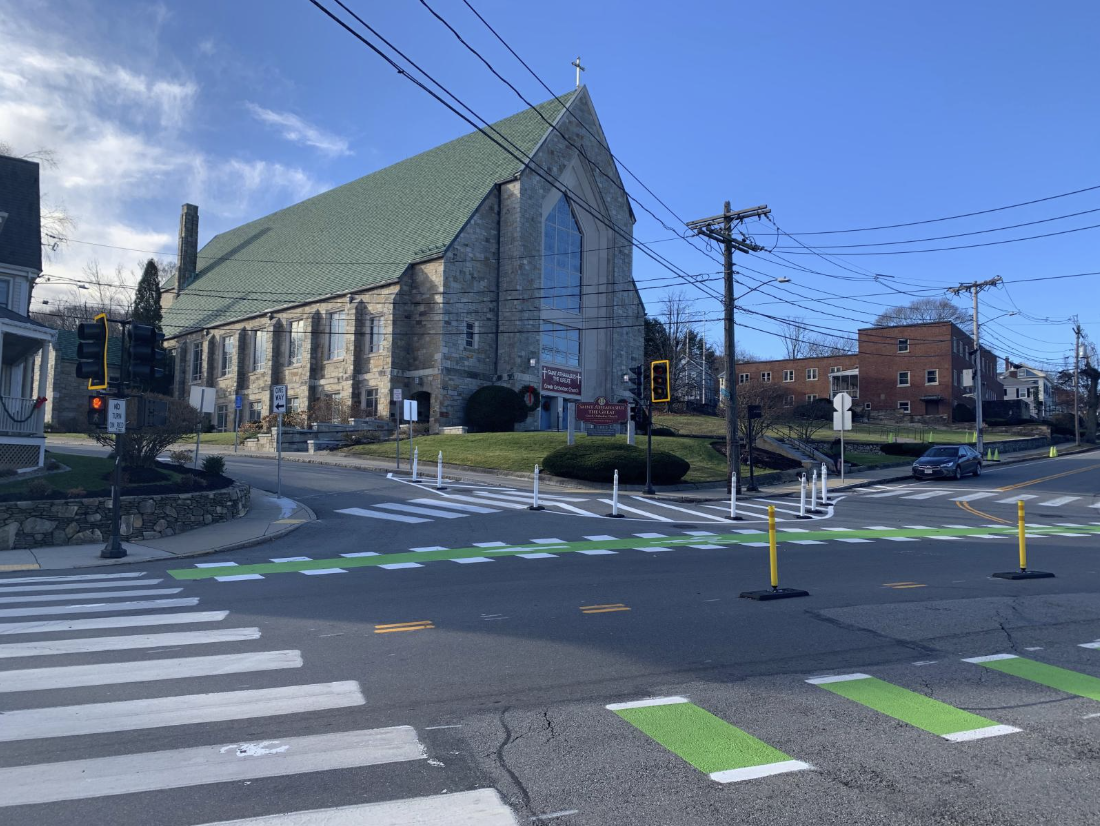
Particularly in places like Lynn with irregular street grids, streets that meet at unusual angles may create intersections that are confusing, have difficult sight-lines, or encourage high speeds and fast turns. Geometric changes that reshape curbs and edges to reduce excess space for vehicles at intersections and make them function more conventionally can address some of these issues. Geometric changes may also provide opportunities for the placement of public amenities like benches, bike parking, and trees.
Protected Intersections
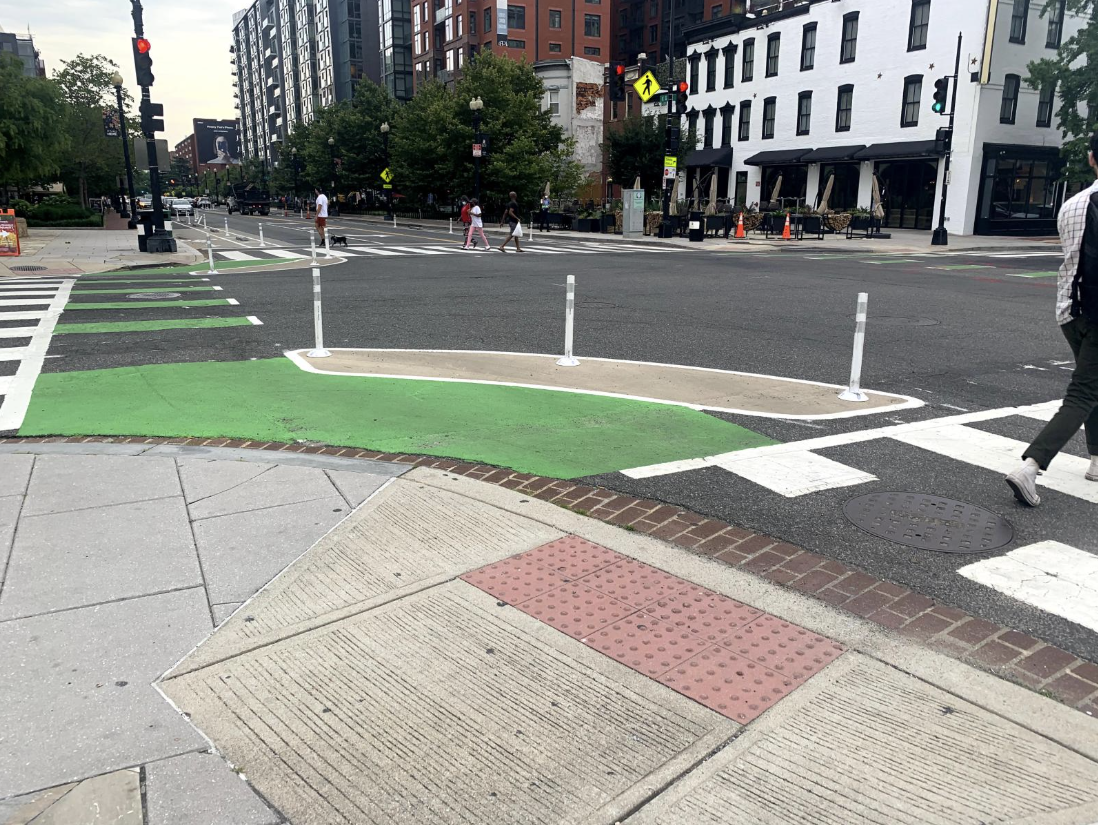
Protected intersections guide people biking safely and comfortable through intersections by providing them queuing space, making them visible to drivers, and slowing turning drivers. These changes also shorten crossing distances and make intersections safer for people walking.
Raised Crosswalks
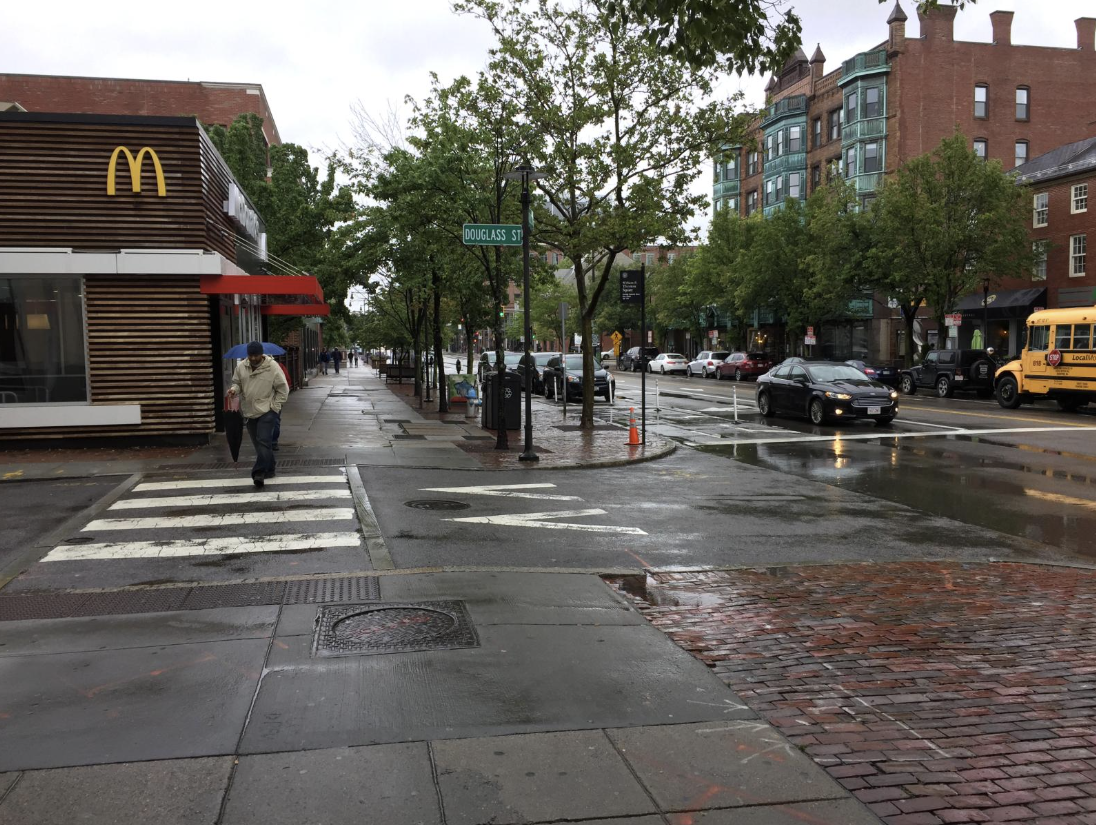
Raised crosswalks elevate crossings to the sidewalk level, providing a continuous path of travel for people walking and making vehicle traffic ramp up and back down at crosswalks. This reinforces the priority of pedestrians in crosswalks, makes people crossing more visible, and slows vehicle traffic at crosswalks.
Leading Pedestrian Interval (LPI) Signal Phasing
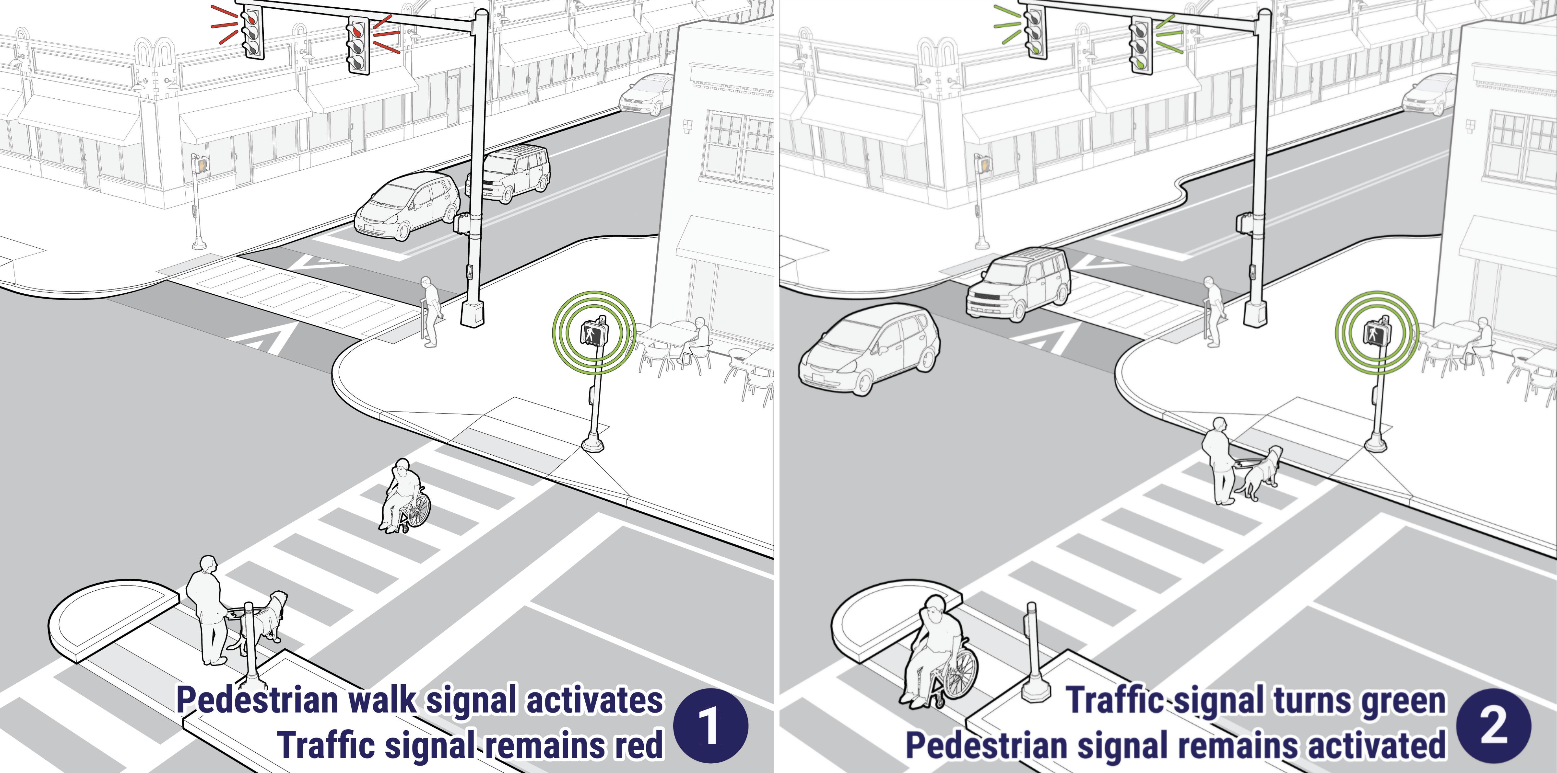
LPI phasing at intersections with signals gives people walking a 3-7 second head start to begin crossing before the corresponding vehicle signal turns green. This head start serves to reinforce pedestrian priority over turning vehicle traffic and make people crossing more visible to drivers.
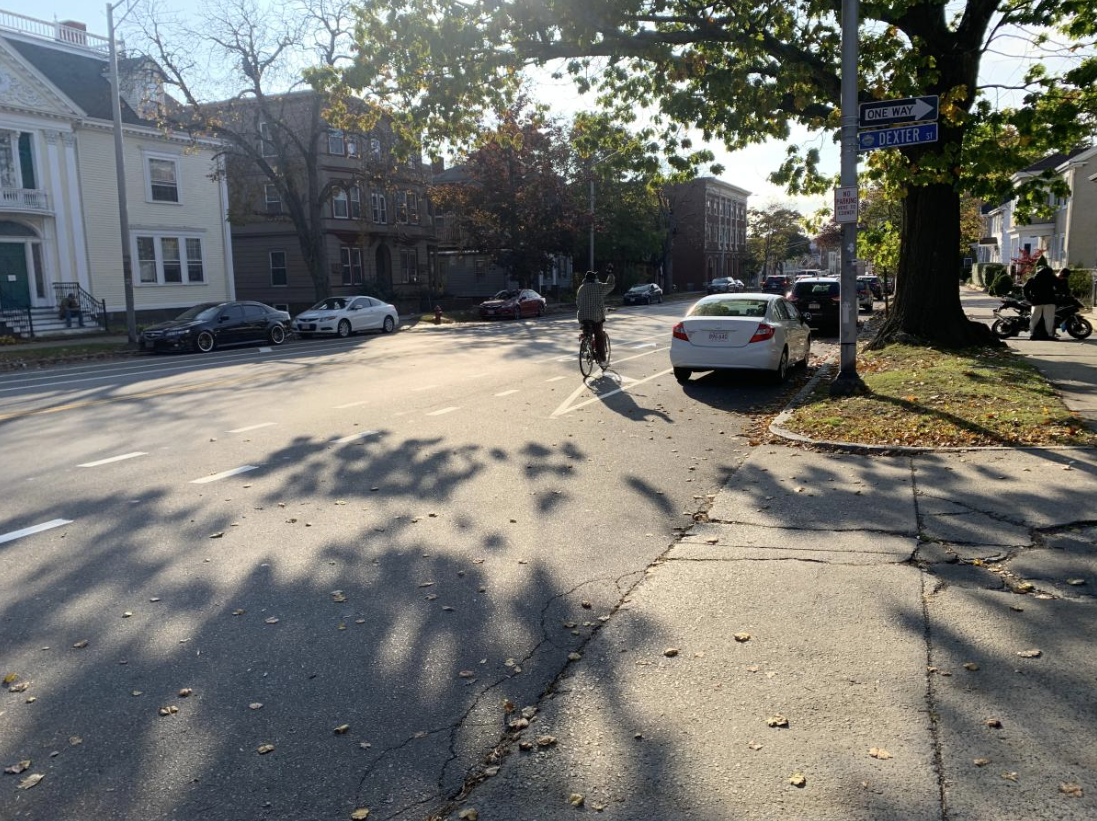
Bike lanes improve safety for all road users by giving people biking a dedicated space on the road, reducing conflicts with people walking on the sidewalk or driving. Bike lanes can also provide people with an additional option for reaching their destination.

Thank you for your contribution!
Help us reach out to more people in the community
Share this with family and friends